
It is difficult for emerging artists to find a marketing approach that suits their ambitions, needs, and means from the many marketing options available to them. In the past, radio play could only be secured by big-name musicians on major labels who had large networks of influence.
Despite all of the social media and online streaming platforms that we have today, having your songs played on the radio continues to be an essential component of any music career. The big question is, how do you get radio play?
What makes radio exposure so important?
The rise of social networks and new distribution channels (Instagram, Facebook, Youtube, and other streaming platforms) has brought both opportunities and challenges to music promotion. Everyone can leverage these platforms because they are free. Nowadays, it is possible to distribute your music on most streaming platforms at a relatively low price. On the other hand, reaching potential listeners is more complicated because it's hard to come up with an effective campaign that works without it being overly adventurous. Every day, over 20,000 songs are added to Spotify, making it hard for artists to stand out without spending a lot of money or risking wasting too much of their time.
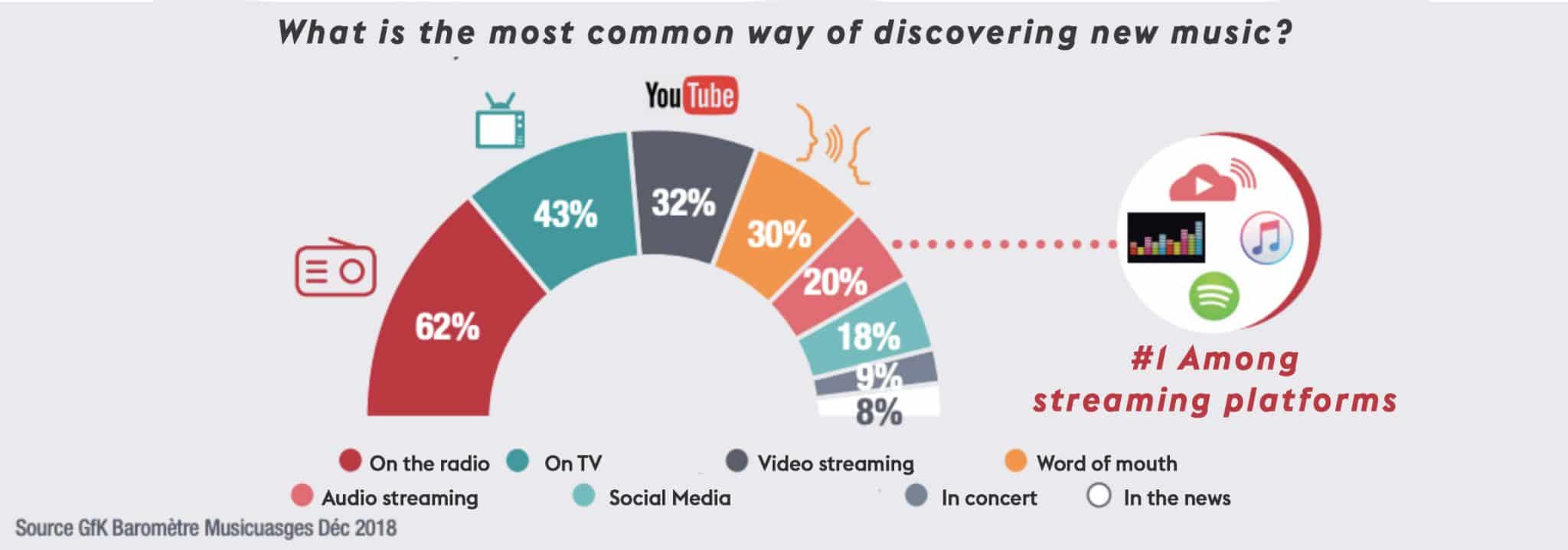
62% of new songs discovered through radio... streaming accounts for only 20%
Media traditionally used for promoting music, such as the press and television, have lost a lot of their influence over the years. It is no longer necessary to use these media to promote music. But despite the competition from streaming services, radio still remains the primary source of discovery for music. Radio plays a significant role in new music discovery, with about 62% of new songs discovered through radio. Streaming accounts for only 20%, primarily among non-subscribers of streaming platforms. With apps such as Shazam, listeners can play the same song over and over again... for example on Spotify!
Here are 5 tips for getting your song heard on the radio and shared with a whole new group of potential listeners.
1. Develop a solid music project to get your song on the radio
If you want to stand out and appear credible to any music professional, you first need to be (somewhat) professional yourself. Keeping in mind the following criteria can help you stand out:
- Ensure your music project has a unique and strong visual identity.
- Prepare a press kit that summarizes your project and your background.
- Participate in social networks (Facebook, Instagram, etc.) and maintain a certain level of visibility.
- Your recordings must be available in the best possible audio quality (.wav, 16 bits, 44100 Hz).
- Make sure that the metadata for your track is filled-in (metadata is digital information about the music, such as the title, performer, author, composer, producer, ISRC code, etc.).
2. Make sure you select the right song
This is the most important step in the entire process. It is imperative that you submit a high quality song. It must have undergone all stages of musical creation, from the choice of title to the creation of the composition, arrangement, recording of the voice, mixing, and art work. In this case, the biggest challenge in selecting a "single," a track that is both representative of your work as well as has a high potential to be listened to by your audience. More simply said, select your “best hit”... usually not your personal favorite, but the song that listeners are telling you that they like the most. The opinion of family and best friends may not always the best indicator if a song is great! Some people will tell you what they think you want to hear, because they don't want to hurt your feelings... This can also apply to anyone that you are paying to work with you on your productions. Get feedback from people who more or less have nothing to lose if they tell you (one-on-one) what they think about your music. In other words, asking feedback through a group on social media is also not ideal. Asking for feedback from people you hardly know takes courage, but it will help you the most in making your selection. The road to success requires courage, and if you don't have the courage to get good feedback, then don't waste your time on a quest to get your music on the air. On this journey you will have rewarding moments and you will also face rejection, maybe even stumble from time to time. It takes a winners mentality to win in music.
3. Respect radio formats
The length of your song is another key factor in getting your song played on the radio. Most formats require that a track length is between 2 min 30 and 4 min. if you go outside this duration, your chances of getting on the airwaves may be more limited. Having said that, don't restrict your artistic creations. Use your creative potential to the fullest extent according to your desires and how you want to use it. Just know that radio formats have an impact on your options.
Risking and experimenting will help you stand out as an artist. If possible, we recommend that you create a version of your single that is intended for radio play. A radio broadcasting version means that it respects the duration format, and excludes any explicit, obscene or shocking parts. Video clips usually follow a similar format.
Note: Explicit, obscene or shocking parts in songs (or other songs that you have released) will usually block all chances that you could have had to be aired, interviewed, or promoted on Christian stations, media, etc.. If you have switched from secular music to Christian music, I personally recommend that you create new profiles to separate your Christian music from your past (secular) releases and release your Christian music under a new stage/band name.
4. Take quotas into account
Don't forget to account for quotas. It is not uncommon for radio stations to set quotas for the type of music they are to broadcast. Quotas can be set by a station (by format or by format type), and possibly even by governing bodies. In France, for example, the CSA has imposed a quota designed to protect French-language songs from invasion by Anglo-Saxon songs flooding the airwaves.
Private radio stations in France are required to broadcast at least 40% of their songs in French, 50% of which must come from new artists or new releases.
5. Be open to new ways of reaching potential listeners and select the right kind of radio station for your music
The musical profile of every radio station is unique to its audience. Therefore, the radio station you choose to air your song is an equally important consideration. If you go to a metal radio station and suggest a Christian Praise track, then you're wasting your time. Pick radio stations that play the same type of music like yours and make sure that you approach them in a way that makes sense to maximize your chances of being heard.
The traditional format of radio (on the air) is losing traction rapidly, and an entirely new form of online radio is gaining prominence and providing a new marketplace for emerging artists. Find platforms that will help you reach out to radio stations, media, and label partners who are the most compatible with your music. Free services typically do not exist, so make sure you rationally spend your money. Don't blindly submit your music to stations without checking their profile first. Use the information you find about the station / media to customize your message before you send it.
Some artists submit songs to us through these platforms, and our profile states that we only accept Christian music. However, a surprising number of artists still submit music that is not Christian. In one of the platforms that we use for receiving submissions from artists, only 18% of the music we get is Christian music, and the remaining 82% is not only a waste of artists' time, but they could have avoided this if they had taken the time to check our profile!