التخطي إلى المحتوى الرئيسي

Finding Refuge in God's Embrace: "Hiding Place" by Hannah Schaefer


Hannah Schaefer's song "Hiding Place" is a song that gently reminds us that no matter how distant God may seem or how long and weary the journey with Him feels, there is always a refuge in the Lord—a sacred hiding place where our hearts can rest and find peace.
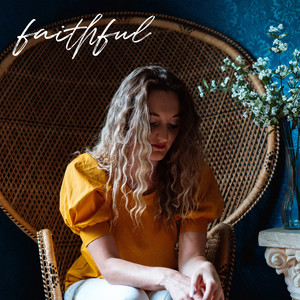
Hannah Schaefer - Hiding PlaceHannah sings about a long and tiring journey alongside God, where feet are "beat black and blue." She beautifully expresses the peace that we may all find in His unwavering love. Hannah sings of God's open arms, a safe place that He has prepared, and the grace that continually amazes her. The chorus, "I can always find my hiding place in You," emphasizes the steadfastness of God's protection, comparing it to a mountain that can't be moved. 

The beauty of this message is that His arms are also open for each of us. The only thing stopping us from finding that comfort in God is us, our pride, our misplaced idea that we don't need Him. He is there, waiting for you to accept His invitation to find your hiding place in Him—our unshakeable and loving refuge.

(Related scripture: Psalm 32:7; Psalm 46:1; Matthew 11:28)

Connect with Hannah Schaefer


You can listen to the track directly on Spotify: https://open.spotify.com/track/5JpuHSGOd1qd81dnSX1ZSP


Popular posts

"I Need God" by Richard Baś: Because Nothing Else Really Satisfies

Have you ever chased what you thought was peace and come up empty?  “I Need God” by Richard Baś is a song for people who keep searching and never find enough. Richard wanted a Christian song with energy and edge — something that causes listeners to experience certain emotions that are regularly not in the Christian genre. The song opens with restlessness: “These days I’m running from my own shadow,” he sings, “trying to find a peace of mind.” He tries love. He tries drugs. He tries more. Nothing changes. That’s the trap that so many of us already know. We chase one thing, then another, hoping the next thing will finally be enough… But it never really is.  There is a shift in the song. “Jesus has set me free and I, I am free now,” Richard declares. The running stops. The striving stops. Richard names it clearly: “Yeah I need God.”   The song echoes the same message that we read in Psalm 42:1–2: “As a deer pants for flowing streams, so pants my soul for you, O God. My so...

"I Love to Praise Your Name" by Chrystal: Worship That Survives the Storm

A declaration of consistent devotion and faithfulness to God (by Jasper Tan) Chrystal Williams-Alberty’s “I Love to Praise Your Name” is a beautiful and heartfelt contemporary praise and worship song. The song focuses on our devotion and adoration to our God. The lyrics are simple but deep in expression. Reminding us that to worship God is a lifelong commitment, and we should always give our gratitude and faithfulness to our loving God. The song shares a message that is similar to Psalm 34:1 —  “I will bless the LORD at all times; his praise shall continually be in my mouth.” Chrystal came up with the song from her own personal experiences where she wants to praise God even in her most difficult times. This shows us that praising God isn’t just when things are going our way, but even in the most trying times; our devotion and faithfulness to him must remain constant. This is what makes this song beautiful because it came from a place of sincerity and raw honesty. Chrystal shows her unw...

"Arrows (Psalm 127)" by Matt Rees: Raising Children With God

Children aren’t a burden — they’re a gift. “Arrows (Psalm 127)” by Matt Rees is a simple family-centered message about trusting God to guide you as you build your home. Matt picked up an acoustic guitar and let Psalm 127 speak for itself — warm, simple, family-centered. No embellishment needed. The words carry their own weight. “Behold, children are a heritage from the Lord,” the song opens. “The fruit of the womb is a reward.” This line (quoting Psalm 127:3) points out that children are a “gift/reward from God,” and shouldn’t be confused with “wages you’ve earned” or “proof of divine favor you possess.” This scripture isn’t making a claim about the worth, status, or blessedness of people who don’t have children. Those are two different statements, and a lot of painful misreading happens when the second gets smuggled in under the first. Children are not a burden, or an inconvenience squeezed into a busy schedule. Psalm 127:4 compares children to “arrows in the hand of a warrior”  ...
