
Forty Years in Babylon is a new concept album by Paul Arendt. This album is modern protest music with a mythic and mystical feel that is triggered by these maddening times.
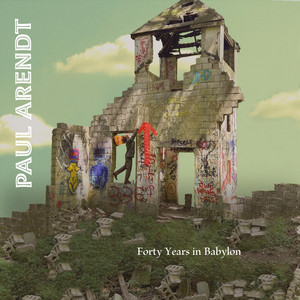
At its heart is the story of Babylon, the mighty city falling, from a modern American perspective. The project blends Joni Mitchell and Anais Mitchell's lyrical and poetic depth, Nick Drake's haunting beauty, and Tool's hypnotic force, guided by a busy and masterful Spanish guitar that often participates in the storytelling as much as the singer.
Arendt wrestles with matters of the Spirit in an inviting and vulnerable way, and addresses topics such as social fracture, technology superstructures, the culture trembling and buckling beneath us, and our collective forgetting. The mesmerizing music blends whispers from India and West Africa, Bulgaria and Ireland, American heavy metal, and cross-cultural Blues, creating a unique style and innovative approach to playing the guitar. Arendt plays guitar with passion, tenderness, and precision.
Arendt may be unknown to many because he lives quietly on an emu farm in Delaware, or maybe it is because he still uses a flip phone, but he is heading out to honor this amazing project. He tells his story like a novelist, with the urgency of a ringing phone. Forty Years in Babylon diagnoses a sick society and offers medicine, an antidote, and a reminder to break free from the forces that have captured us all and return to divinity and real connection in the middle of our superficial world. Heartfelt, artistic music is still around, but hard to find.
This album's fourth song is called 'Theo'. The song is about a believer and an atheist who are having a lengthy conversation. After stating their cases, they agree to become friends. Other songs on the album are based on world music traditions adapted for the Spanish guitar, but Theo is more straightforward, rooted in cross-cultural Blues.
Though difficult, it's fun to play, and a film crew filmed a barn live-take at Paul's farm. The YouTube video is also great to watch. You'll not only see Paul in action, but you'll also meet the goats and emus.
These songs don't fit into a playlist model like most concept albums, but 'Theo' and the rest of the album are great to listen to stand alone. If you listen to the entire song (Theo), you'll hear a thousand non-repeating words and a captivating conversation between two people with different worldviews.
We hope it makes you smile and encourages you to listen to the entire project. Paul adds, 'It is the finest thing I have to offer anybody, as I believe in every word and every note with my whole heart.' Paul has something to say, and we think you'll also like his innovative guitar playing.
Connect with Paul Arendt
- Facebook: https://www.facebook.com/PaulArendtSunflower
- Instagram: https://www.instagram.com/sunflowersforastronautsdotcom/
- Soundcloud: https://soundcloud.com/paul-arendt-741151199
- Bandcamp: https://paularendt.bandcamp.com/
- YouTube: https://www.youtube.com/@paularendtsunflower
- Spotify: https://open.spotify.com/artist/0OznesWqTC2TtGGxaK3RmR

You can listen to the track directly on Spotify: https://open.spotify.com/track/2m19KklyIHU6i47kIUUXCf
Here is a link to the video on YouTube: https://www.youtube.com/watch?v=2hx4DpB5tn8
Would you like to hear more CCM music? Then check out our Christian playlists on: https://www.christiandance.eu/playlists