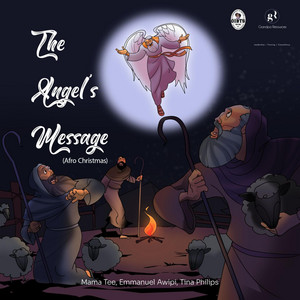
Mama Tee, Awipi, and Tina Philips Bring Joy with 'The Angel's Message (Afro Christmas)'


Mama Tee, Awipi, and Tina Philips - The Angel's Message (Afro Christmas)

Mama Tee, Awipi, and Tina Philips released an inspiring medley of timeless Christmas classics, 'The Angel's Message (Afro Christmas).' A medley that beautifully blends familiar melodies like "Ding Dong Merrily on High," "Hark! The Herald Angels Sing," "Gloria in Excelsis Deo," and "The Little Drummer Boy," songs with lyrics that are centered around the angel Gabriel's messages. 

The lyrics tell how the shepherds were watching their sheep at night when the angel Gabriel came with the news that Jesus had been born. The praise, "Glory to God in the highest," sets the tone for a most inclusive celebration that is passed down through the generations. Gabriel's message brings hope and divine love, reminding us that Christ's birth is a fulfillment of prophecy, a gift of peace, and a reconciliation for humanity. It's a message to cherish every day of our lives. 

As the song declares Jesus as Immanuel, "God with us," it's giving us a gentle reminder of His presence in our daily lives. May this Afro-Christmas medley not only connect you to the divine story but also invite you to accept Him as your Lord and Savior, and help you to celebrate His gift to us with joy and gratitude.

(Related scripture: Luke 2:8-11; Luke 1:26-31; Matthew 1:22-23)

Connect with Mama Tee, Awipi, and Tina Philips


Would you like to hear more Christmas music? Then check out our Christian playlists on: https://www.christiandance.eu/playlists

Popular posts

"Faith Like Daniel" by Marlee Smith: Praising God When the World Says No

Who do you trust when everyone disagrees? What do you do when the world says that your God doesn’t matter? Marlee Smith’s energetic pop-rock song, “Faith Like Daniel,” comes with an all-teenage female band behind her, and her response to what the world says is anything but timid. When the world feels overturned, she’ll keep “praising my Father,” even when the world says she shouldn’t. Remember what we read in the Bible about Daniel? Daniel knew that pressure. A royal decree banned prayer to anyone but the king for a period of thirty days. Daniel heard the news, went home, opened his windows, and prayed as he always had. No speeches. No protest. Just steady faith, three times a day. Then came the lions, and what happened that night in the den became a testimony. Scripture says, “No kind of harm was found on him, because he had trusted in his God” (Daniel 6:23). Daniel never trusted that his circumstances would be easy. He trusted the One who stood over them. Marlee’s message carries t...

"I’ll Rejoice" by David Dowdell: Finding Joy in God When Plans Fail

Can you praise God when nothing goes right? Empty vines. Failed crops. A barn with no animals. David Dowdell opens his song, “I’ll Rejoice”, with a list of losses that is so complete that it feels as if “there is nothing left at all.” David took his inspiration from the book of Habakkuk and wrote a defiant anthem of praise for anyone whose plans have fallen apart (… we’ve all had that happen to us, one way or another…). The song also asks the question most of us try to avoid: “What if I never get to live the life I wanted?” Will you still trust God when all you have left is “a tired and broken heart” ? Be honest with yourself. Just about everyone has a ready answer for the sunny days, but hardly an answer for the dark ones. Habakkuk didn’t pretend. He saw disaster coming and said so. Still he wrote: “Yet I will rejoice in the LORD; I will take joy in the God of my salvation.” (Habakkuk 3:18, ESV) Notice how this verse starts with the word “yet.” His joy didn’t wait for circumstance...

"Holy Vessel" by Paul Scala: Your Body Is a Temple Worth Guarding

Your body is holy. Live like it. Paul Scala felt the Lord press on his heart to write about a struggle that touches almost everyone, but only a few people actually name it out loud. So he wrote “Holy Vessel” in the voice of God Himself. Not as a lecture. There’s no finger-pointing. Just a Father who is speaking to His children. Listen to how the song opens: “Son, please know that, you were bought with a great price.” Then the lyrics turn to the daughters: “I see you, not in shame but as My bride.” Shame has no seat at this table. Why does that matter? Lust leads to sin, and “sin ain’t worth your soul” . This lust leads to shame, and shame keeps people stuck. Condemnation sends us hiding, while love sends us running. This song reminds us of God’s unwavering love and His desire to restore, redeem, and make us new… especially when we have stumbled or fallen. Paul builds the song on a question: “How’s a holy vessel supposed to live, like it ain’t holy at all?” The song echoes the messag...